
Our purpose
We cultivate the technology and trust that let communities own their future.
The technology for abundance is arriving: clean power, local computing, new ways to grow food and make things. Who owns the new systems, and who shares in what they earn, is still being decided.
Communities can own the systems they depend on, but ownership asks neighbors to decide and act together. And yet only about a quarter of U.S. adults say they know all or most of their neighbors. In 2012, most Americans talked with their neighbors at least a few times a week. Today 40% do.
So the Quantum Harvest Project cultivates two kinds of innovation at once: technology a community can own and run, and the social ties—shared tables, shared places, shared decisions—that turn neighbors into partners.
Abundance is a harvest a community brings in together.
What becomes possible
Ownership rooted in place and community opens a world of possibilities.
As machines do more of the world's work, more of the value will go to whoever owns the machines, the power that runs them and the land beneath them. Communities that own a share can turn that value into a better life for everyone who lives there.
- In every home,an AI advisor that answers to the family alone, keeping personal data and knowledge at home and working for the people who live there instead of mining their data for someone else.
- Across the town,power, water and transport covered for residents, paid for by what the town sells to the world, and year-round community gardens, pools, libraries and gathering spaces, warmed in winter by spare heat from the town's own data center.
- Across the region,farms making fertilizer from air and sunlight, oil-field crews drilling for heat instead of oil, and a creek once dry for generations flowing again.
- Across the country,a network of communities that owns a share of the nation's power and computing, bargains as one and sends help within hours when disaster strikes.
- Across generations,a share for every child born in the community, in facilities that become community-owned by the time that child grows up.
Illustrative · AI-generated
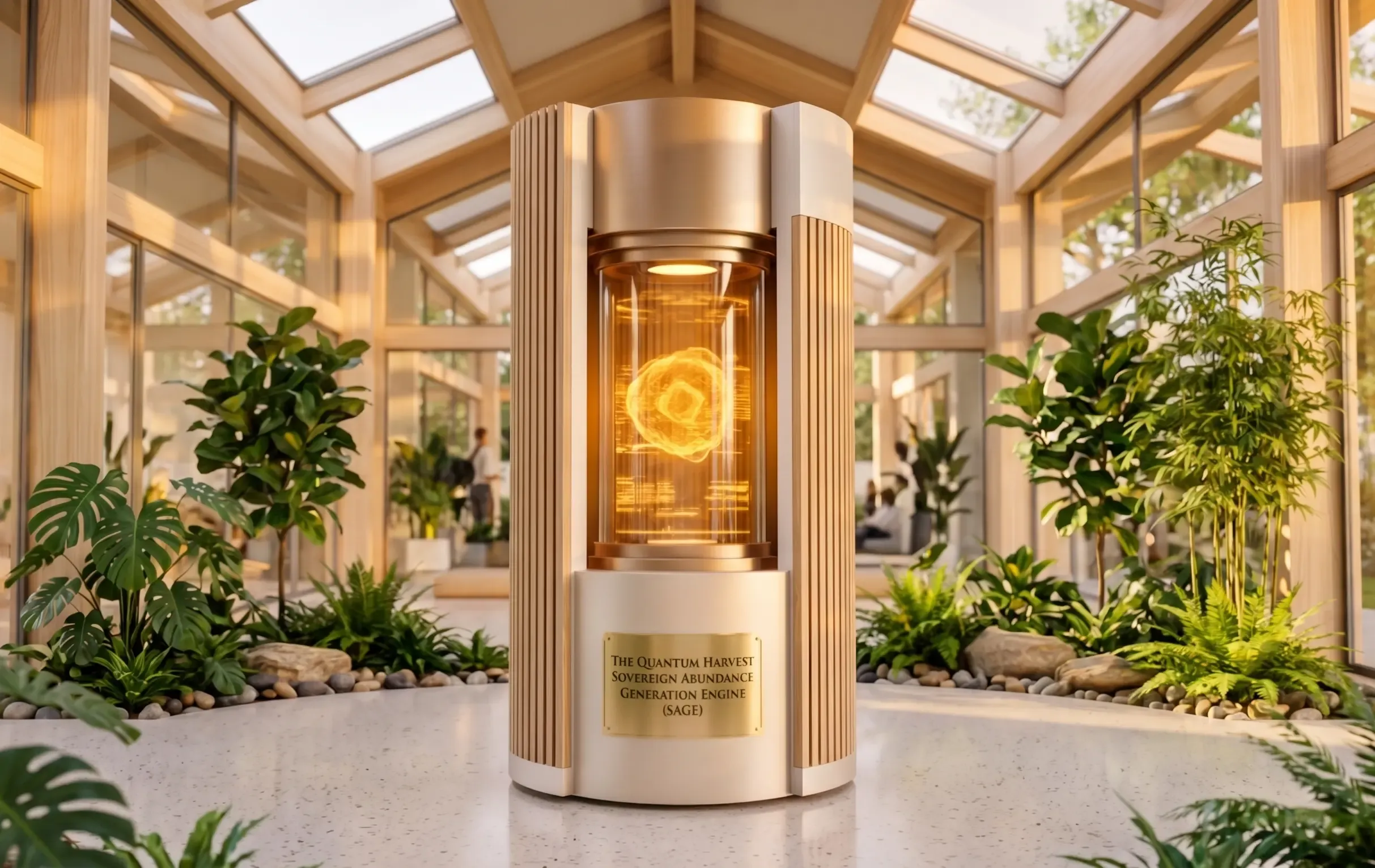
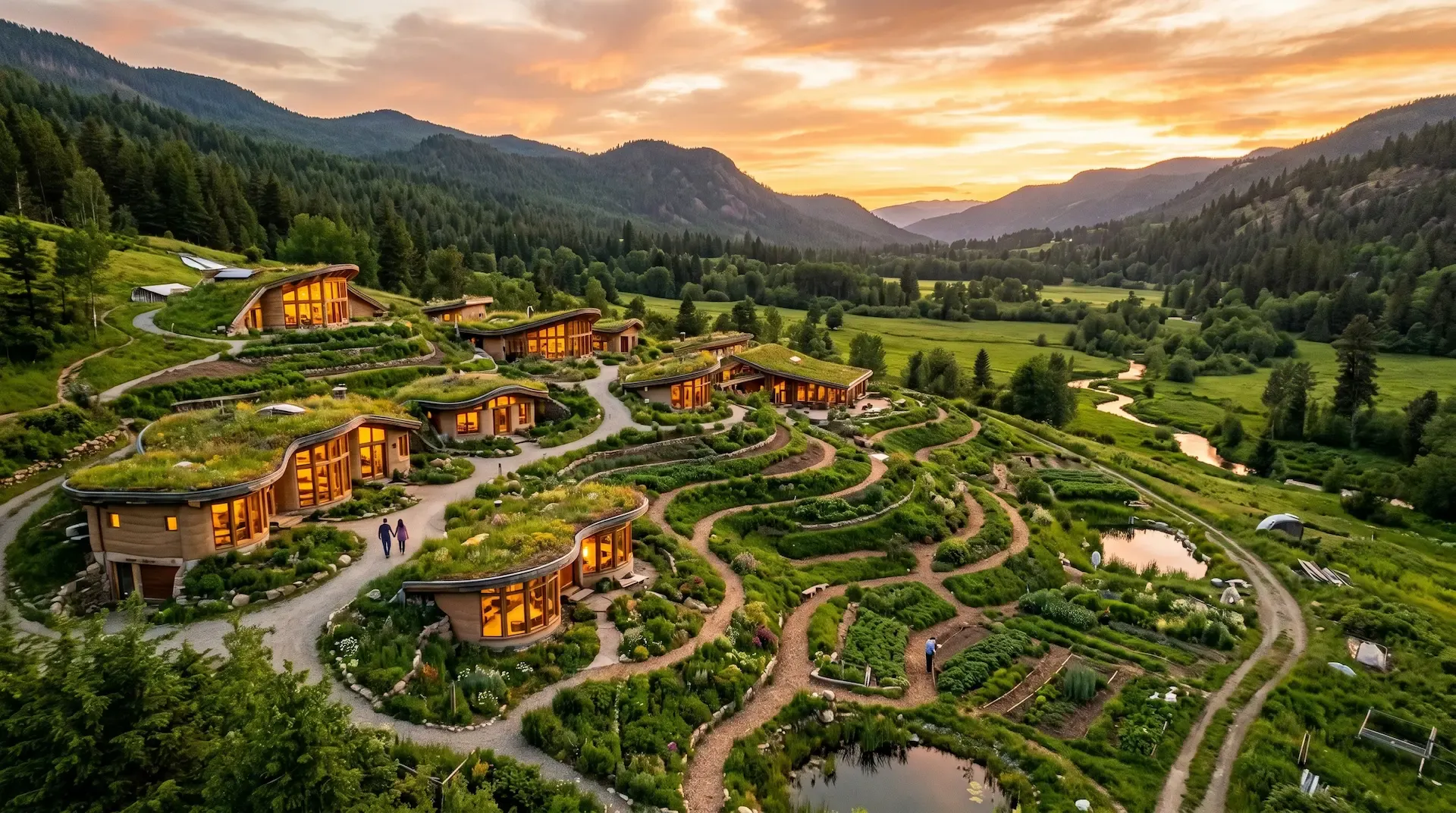
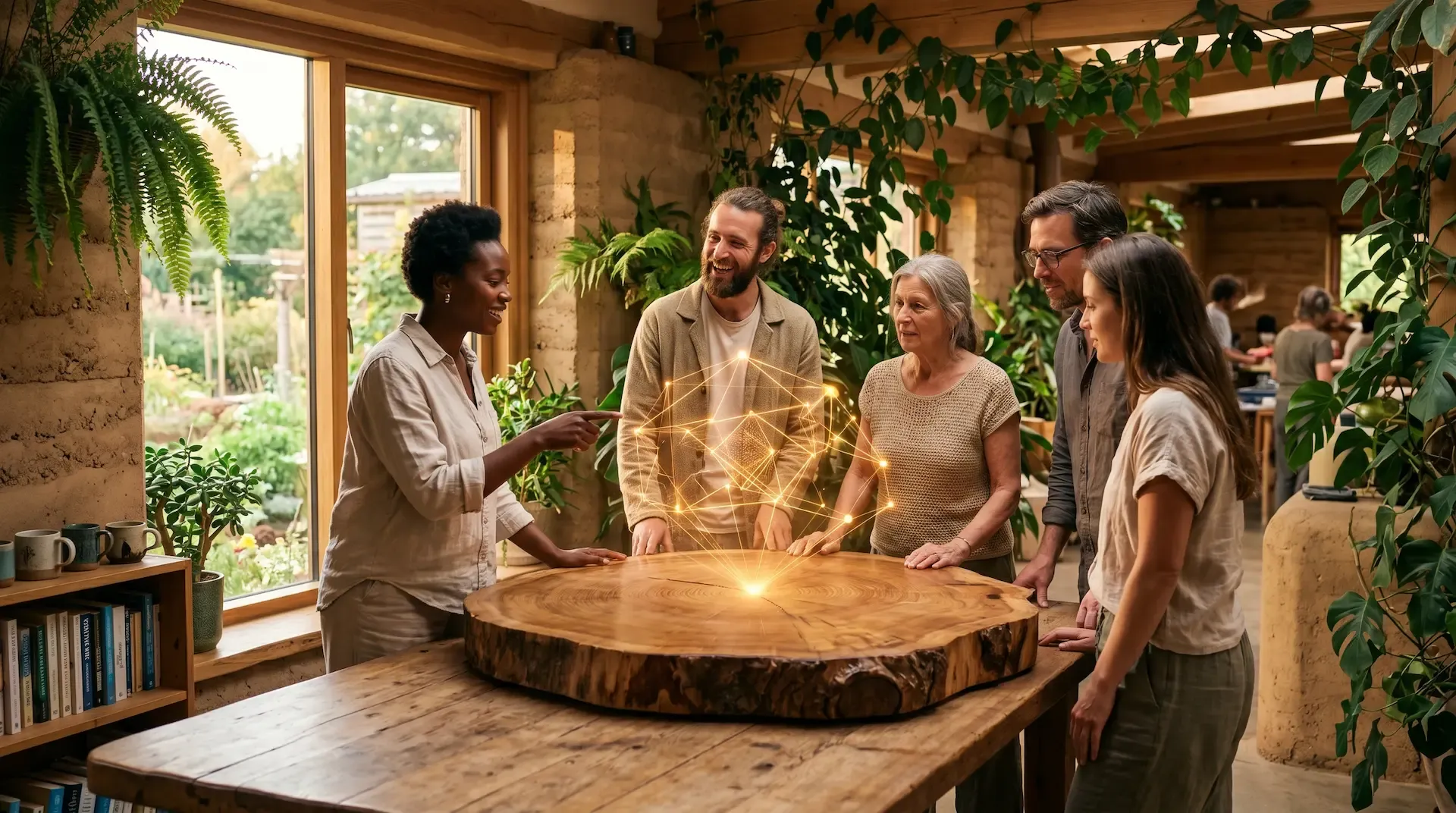
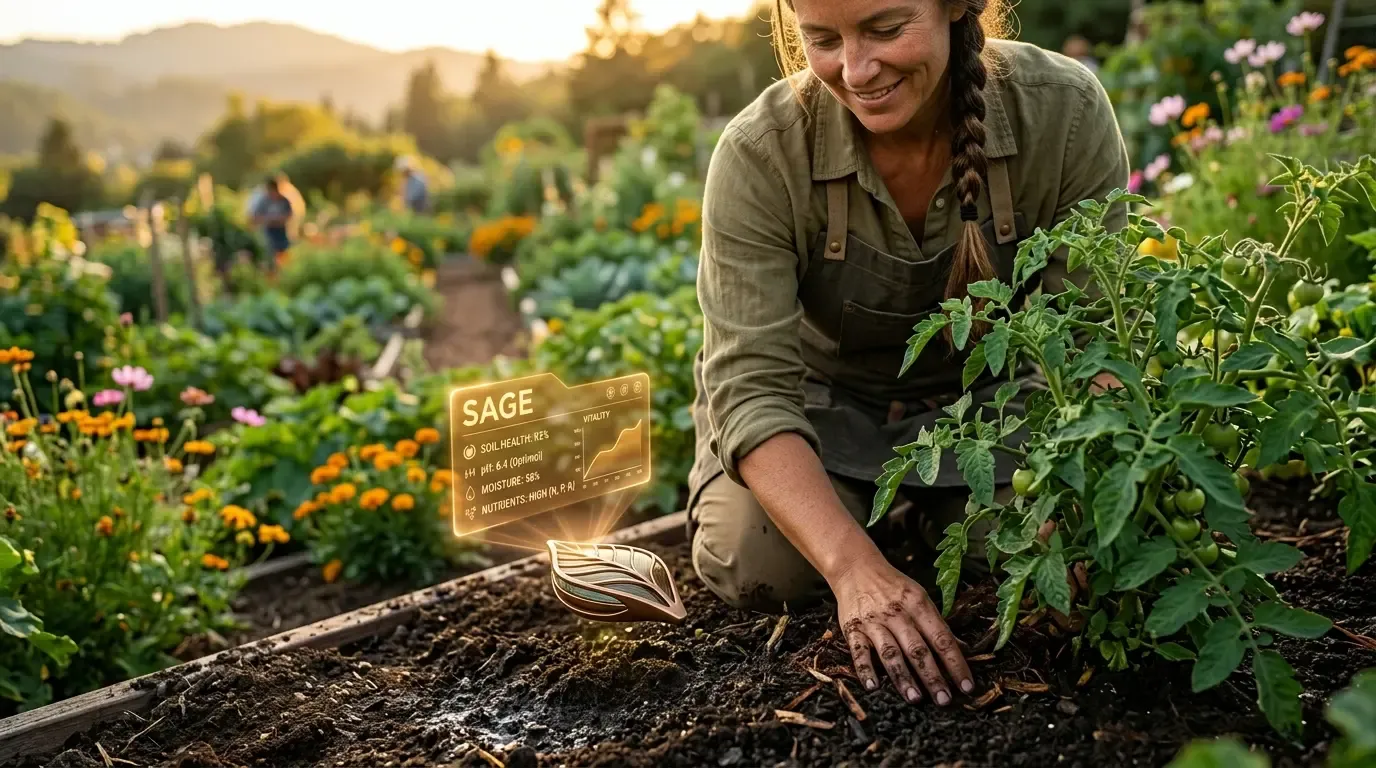
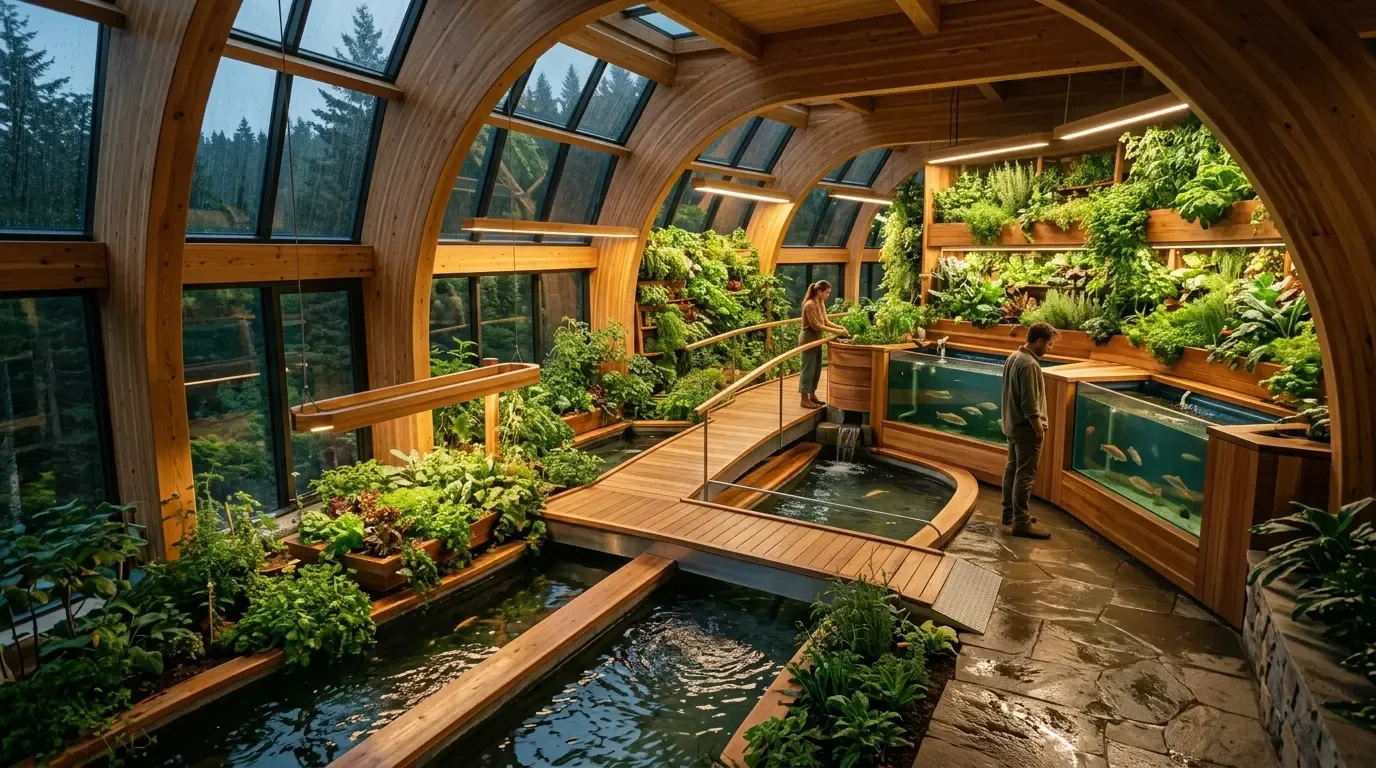
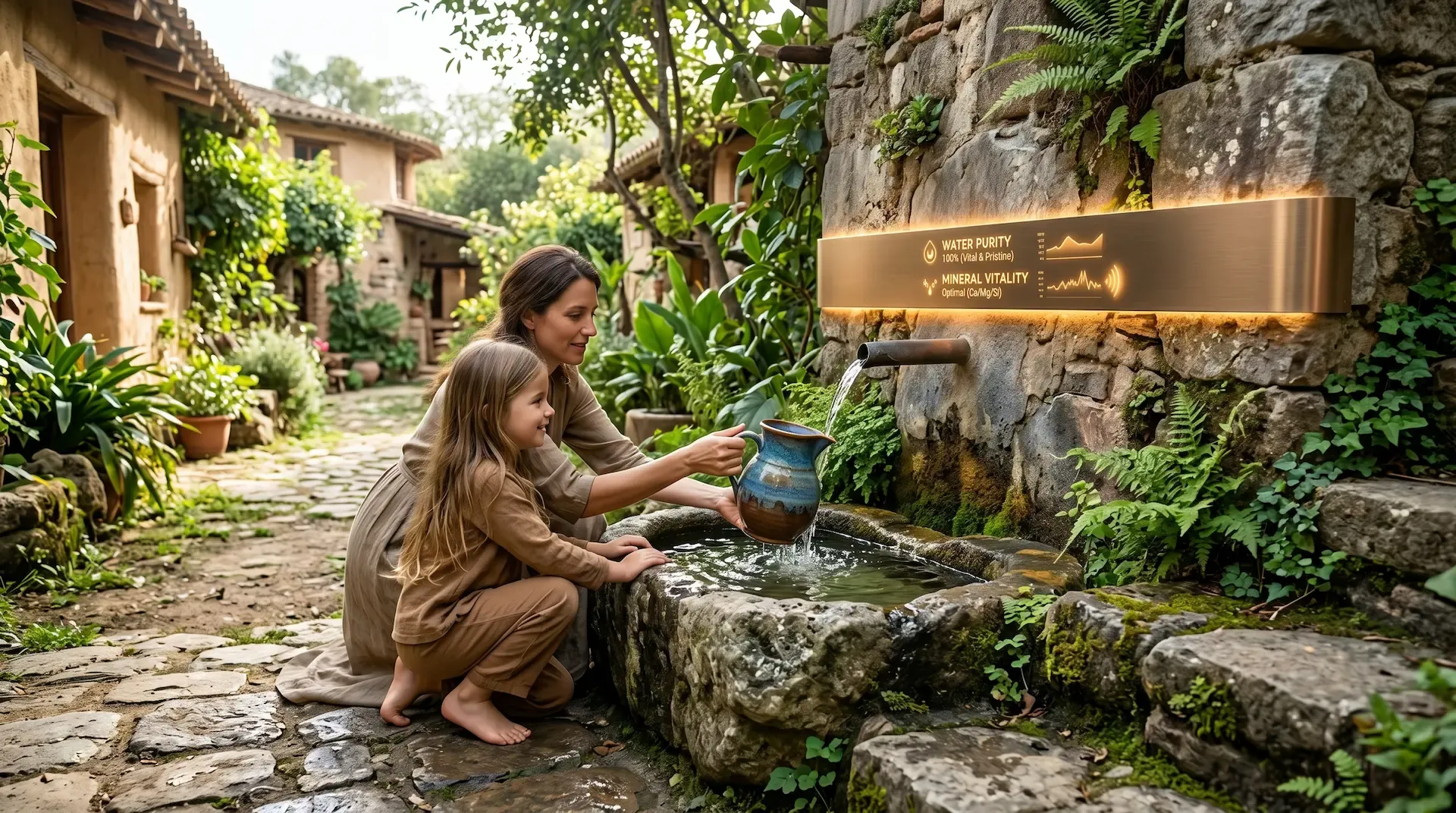
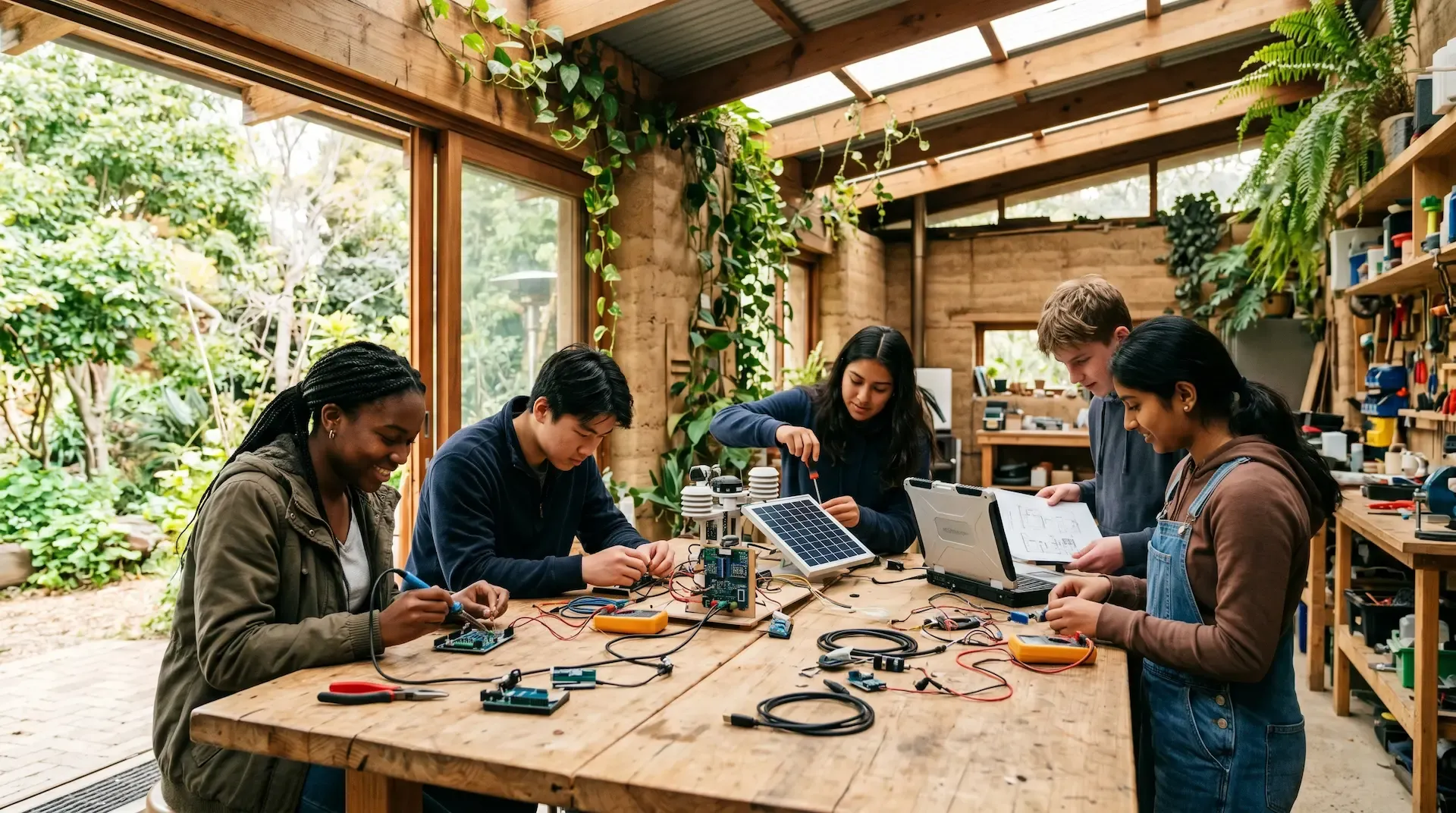

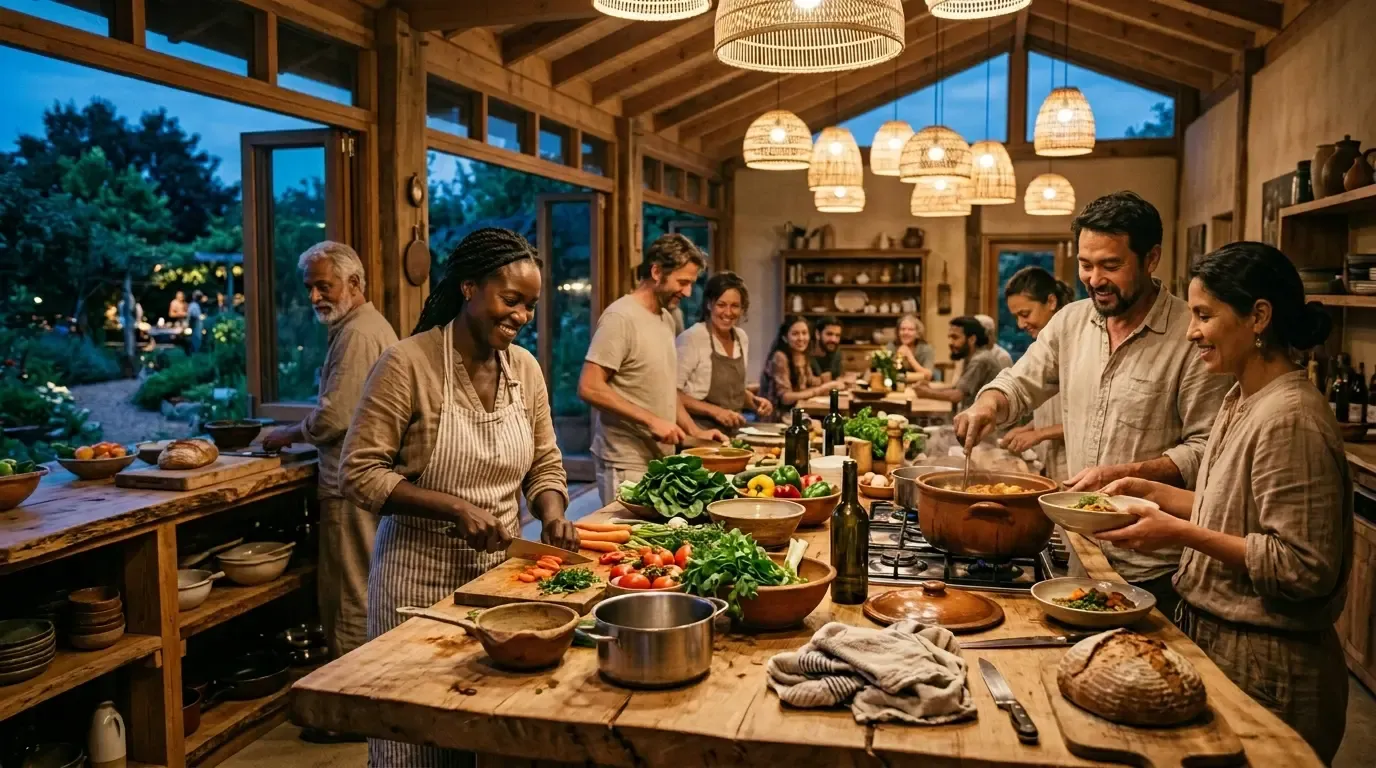
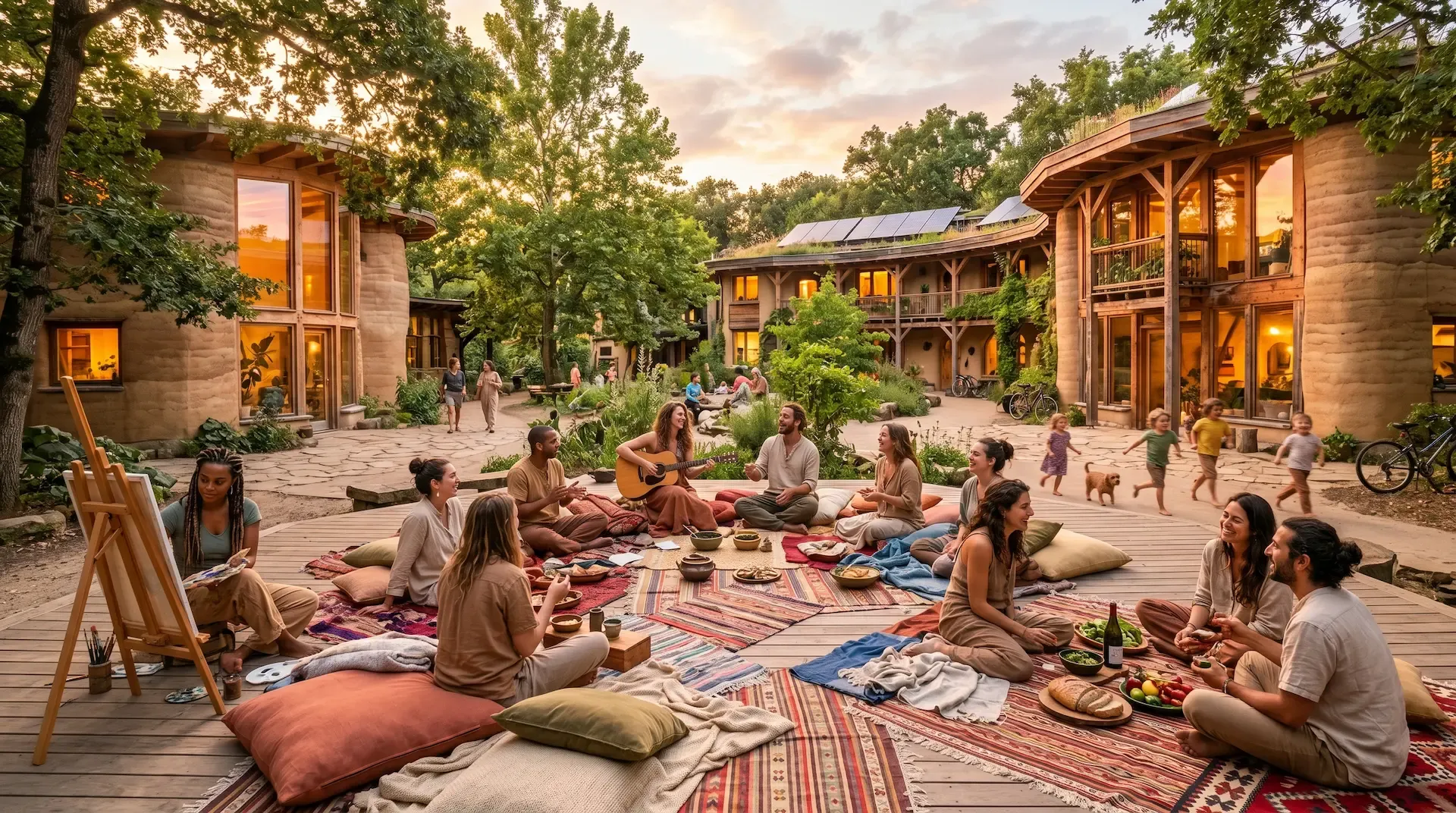
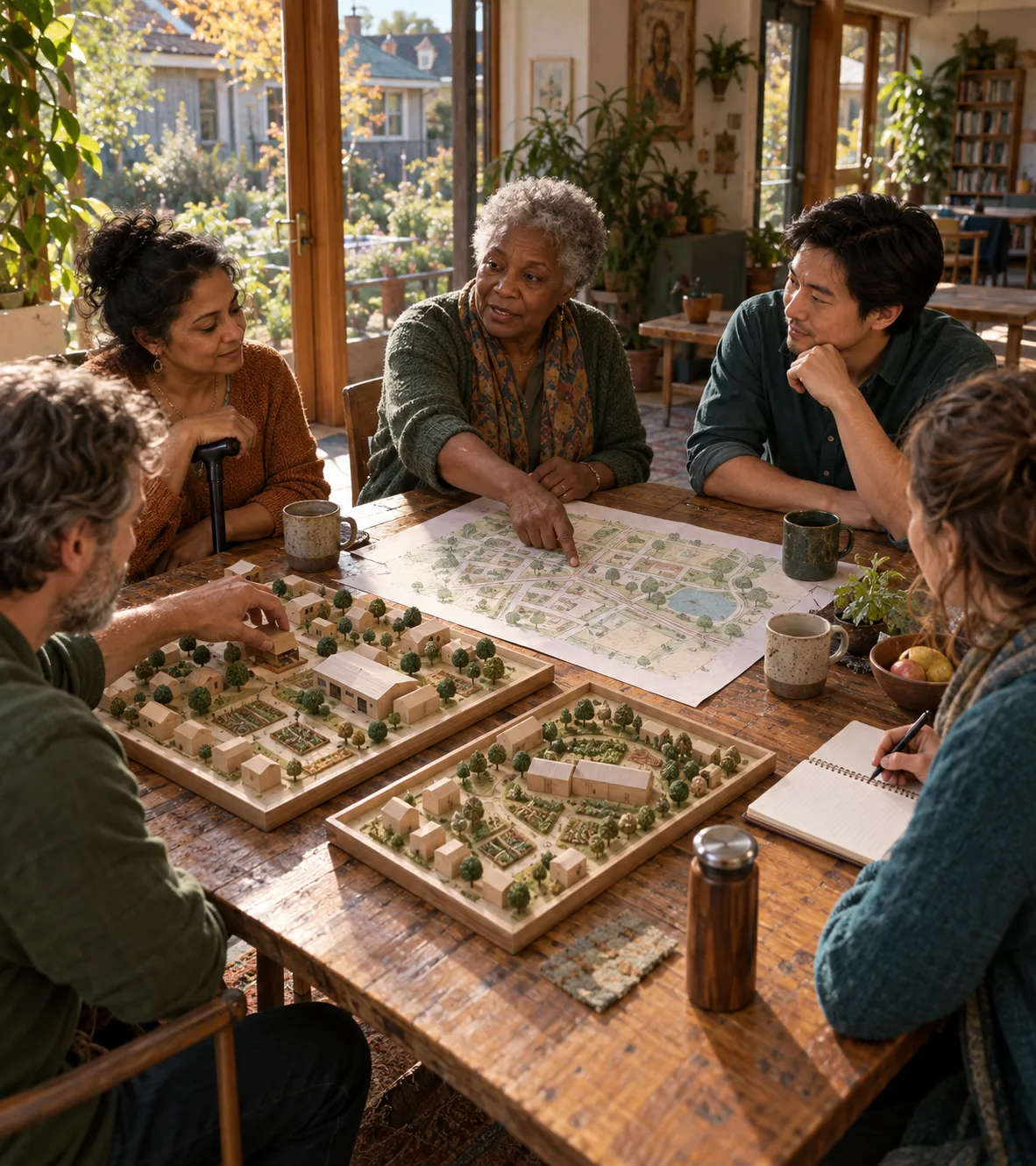
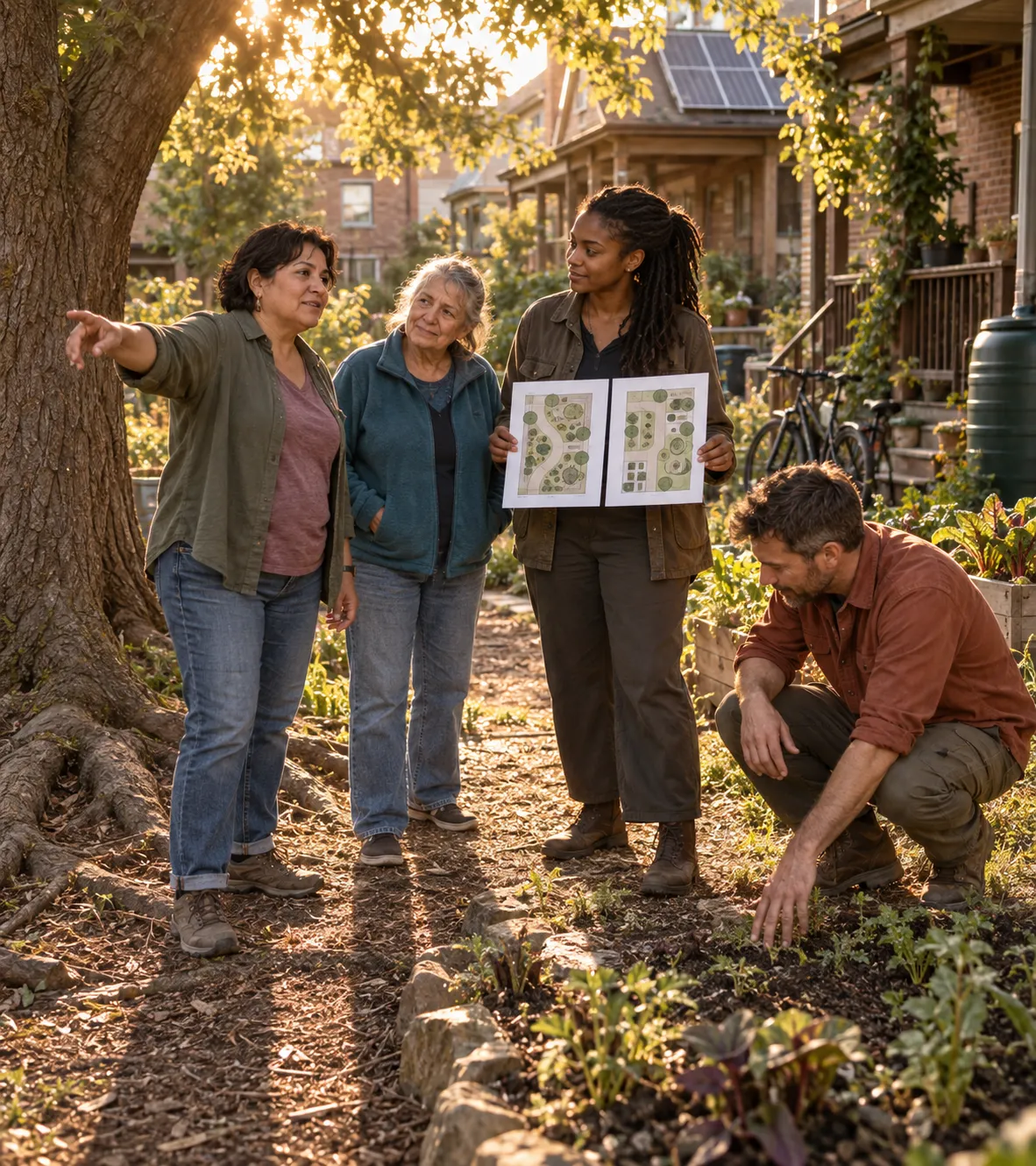
These ideas represent a few of the possibilities that the Quantum Harvest Project imagines for communities. Even more important than any idea we imagine is the way this future becomes real: by connecting communities and giving them the power to choose, build and own what comes next.
Why now
America is building at a scale not seen in a generation.
Investor-owned utilities plan to invest more than $1.1 trillion between 2025 and 2029. Construction spending on data centers grew about eighteenfold in ten years, and nearly four in ten of the data centers now in development are headed to counties that have none today.
And yet few of the communities hosting this buildout hold any stake in what is built. Among more than 3,600 U.S. data centers, researchers found only eight signed community benefit agreements.
Neighbors are organizing. Local groups opposing new data centers grew from 142 to 843 in little more than a year. Ownership could give that energy something to build.
A lesson from history
The last time America built at this scale, communities owned much of what was built.
In the mid-1930s, nine in ten rural homes had no electricity, so farmers formed cooperatives to bring power to their own homes and farms. Electric cooperatives still own about 42% of the nation's distribution lines.
The farmers did not invent electricity. They changed who owned the lines.
Ownership decides where the value of new infrastructure goes, and who has a say in running the systems.
Our first initiative
ROOTS helps communities own and run the technology systems they depend on.
Community ROOTS (Rooted Ownership Of Technology Systems) is the first initiative of the Quantum Harvest Project. ROOTS works across the systems this century runs on—energy, intelligence, land and water, fabrication and production, and built spaces—so that the value of new infrastructure stays with the people who live and work there: owners and renters, residents and workers alike.
In each community, ROOTS builds toward three outcomes.
Wealth
Income, jobs and services that stay local.
Agency
A lasting say over the systems people depend on.
Cohesion
Places and systems that bring neighbors together.
Most efforts to share the benefits of new infrastructure stop at money. ROOTS goes further and puts social cohesion at the center, because neighbors who know one another look out for each other, act together and weather hard times better.
The path
ROOTS begins with discovery for everyone, then builds with one community at a time.
Discover
We show what is possible and bring together the people who can help.
Once, for every community
Scope
A community works with independent experts to design infrastructure projects its residents will own.
Build
The projects are financed and built under new forms of community ownership.
Train
Local people learn to run and maintain the systems.
Share
What each community learns goes to the next, so each new one starts further ahead.
Where we begin
The Discover phase begins by listening.
The Discover phase begins with conversations in communities across the country, with community leaders, residents, workers and experts who know what the new infrastructure means for the places they live.
A convening then brings community members and experts together around shared tables, to describe what is possible and to shape the first project concepts, each rooted in a real community.
Everything learned in this phase is published as open resources, free for anyone to use, with every source shown.
ROOTS grows the way a community does: one shared meal, one honest conversation at a time.
Who leads the work
Led by a builder of energy systems and coalitions.
The Quantum Harvest Project is a charitable project led by Brant Richards, who co-founded energy-storage pioneer, Younicos, and led Third Derivative as Managing Director of Rocky Mountain Institute (RMI).
At Younicos, Brant helped build Europe's first commercial battery park and the world's first island grid capable of running on 100% renewable energy. Third Derivative, the climate-technology ecosystem and accelerator founded by RMI and New Energy Nexus, built a global network of startups, investors, corporations and experts that has supported the growth of over 280 climate tech innovations, created over 4,400 jobs, and mobilized over $3.7 billion in capital since its founding in 2020.